AI Consulting Services in India: How to Choose the Right Partner
What AI consulting services in India should actually deliver, how to evaluate firms, the questions to ask and the red flags to watch for before you sign.


AI consulting services in India range from strategy workshops to full delivery of production models, GenAI applications and data platforms. To choose well, judge a firm on four things: who actually does the work, whether it has shipped systems to production, how it handles your data and security, and whether it leaves your team able to run what it builds.
That sounds simple, but most buyers evaluate on the wrong signals: logo slides, headcount and slick demos. This guide sets out what good looks like, the criteria worth scoring, the questions to ask in the first meeting and the warning signs that should end the conversation.
What AI consulting services in India actually cover
The phrase covers a wide spread of work. At one end is advisory: identifying use cases, building a business case and drafting a roadmap. At the other is hands-on engineering: data pipelines, model development, GenAI assistants, agents and the operational tooling to keep them running.
Most serious engagements touch several of these areas:
- AI strategy and use-case prioritisation: deciding where AI will create measurable value and in what order.
- Data engineering and platforms: getting data into a state where models can use it reliably.
- GenAI and agents: retrieval-augmented assistants, document processing, workflow automation.
- Machine learning and MLOps: forecasting, scoring, classification, plus deployment and monitoring.
- Change and adoption: training, process redesign and governance so the system is actually used.
A firm that only does the first item will hand you a deck. A firm that only does the middle items may build something nobody adopts. You want a partner who can connect strategy to production, or you need to be explicit about which slice you are buying.
The four types of AI consulting firm you will meet
The Indian market has four broad kinds of provider. Each suits a different situation.
| Type of firm | Typical strengths | Common watch-outs | Best fit |
|---|---|---|---|
| Large IT services companies | Scale, procurement familiarity, broad coverage | Senior people sell, junior people deliver; slower to change course | Very large programmes with many workstreams |
| Big consulting and advisory firms | Board-level framing, change management, governance | Engineering often subcontracted; high day rates | Enterprise strategy and operating model work |
| Boutique specialists | Senior hands-on engineers, speed, focused expertise | Limited bench for very large programmes | Getting specific use cases into production quickly |
| Freelancers and talent platforms | Low cost, flexible | Continuity, security and accountability gaps | Well-scoped, low-risk tasks with strong internal oversight |
None of these is universally better. The mistake is buying a large-firm brand for a problem that needs three excellent engineers, or hiring a freelancer for something that touches regulated customer data.
When you actually need an AI consultant
Bringing in outside help makes sense when one or more of these is true:
- You have no in-house ML or data engineering team, or the team is fully committed to existing products.
- You have run pilots that never reached production and you are not sure why.
- The use case touches regulated or sensitive data and you need people who have handled that before.
- Speed matters and hiring a senior team would take longer than the opportunity window.
You probably do not need a consultant if an off-the-shelf SaaS product already solves the problem well, or if your team has shipped similar systems before and only lacks capacity. In that case, staff augmentation or a managed service may be a better fit. If you are unsure where you stand, an AI readiness assessment is a sensible first step.
Evaluation criteria that matter
Score shortlisted firms against these criteria rather than on presentation quality.
Who does the work
Ask for the names and backgrounds of the people who will be on your project, not the leadership team. In many firms the partner who wins the deal disappears after kick-off. You want senior engineers writing code and making architecture decisions, with a named lead who stays for the whole engagement.
Production track record
Demos are cheap. Ask how many of their projects are running in production today, what monitoring is in place and what broke after launch. A firm that has operated live systems will talk comfortably about drift, latency, cost overruns and rollback plans.
Data engineering depth
In our experience, most of the effort in an AI project goes into data: access, quality, lineage and pipelines. A firm with strong data engineers will ask detailed questions about your source systems early. A firm that jumps straight to model choice is a warning sign.
Security, privacy and compliance
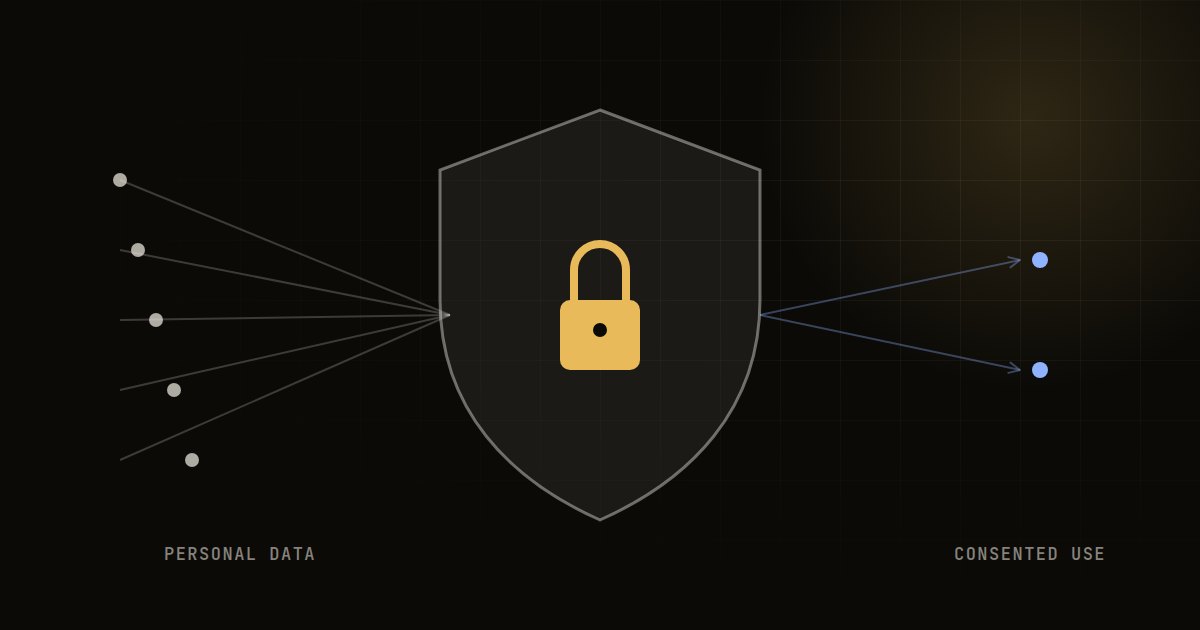
Check where your data will be processed, who can access it, and how prompts and outputs are logged. For Indian organisations, the Digital Personal Data Protection Act 2023 sets obligations around consent, purpose limitation and data handling, and sector regulators such as the RBI add their own expectations for financial services. This is general information, not legal advice, so involve your legal team early. A good partner will expect that and plan for it.
Commercial model and IP
Clarify who owns the code, prompts, evaluation datasets and trained model weights. Prefer fixed-scope phases with clear exit points over open-ended time and materials for the first engagement. Watch for proprietary platforms that lock you into ongoing licence fees.
Knowledge transfer
The best outcome is a system your team can run and extend. Ask how documentation, pairing and handover work, and whether they can offer ongoing support if you do not want to build that capability internally.
Questions to ask before you sign
Use these in your first or second meeting. Vague answers tell you a lot.
- Who exactly will work on our project, and what have they personally shipped?
- Can you describe a project that went badly and what you changed afterwards?
- How will you measure success, and what baseline will we compare against?
- What do you need from our team each week, and who needs to be available?
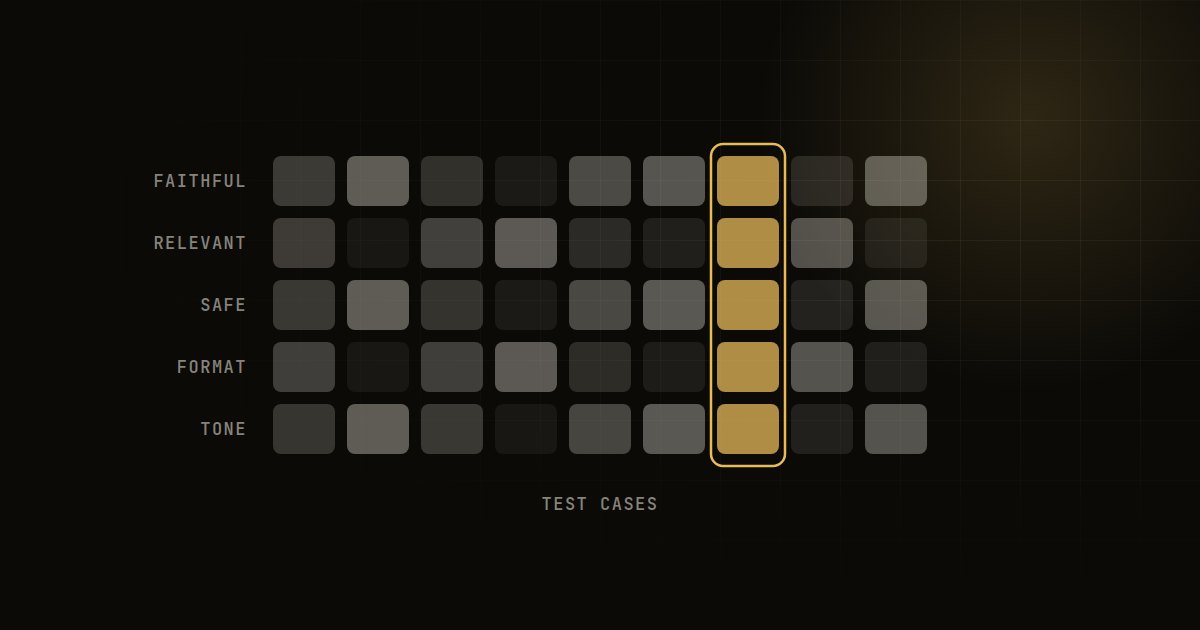
- How do you evaluate model or GenAI output quality before and after launch?
- Where will our data be stored and processed, and who can access it?
- What happens if the pilot does not meet its success criteria?
- Who owns the code, prompts, datasets and models at the end?
- What does it cost to run this system each month once it is live?
- How will our team take over, and what support can you offer after launch?
A strong firm will answer the running-cost question with drivers and assumptions rather than a shrug. If you want to prepare for that conversation, our guide to AI implementation cost covers the main line items.
Red flags
Walk away, or at least slow down, if you see these:
- A proposal that names a specific model or platform before anyone has looked at your data.
- Accuracy promises made before discovery ("we will get you to 95 per cent").
- No mention of evaluation, monitoring or who operates the system after launch.
- A team page full of senior titles but no named delivery lead.
- Reluctance to put success criteria and exit points in the contract.
- Pricing that only covers the build and ignores inference, cloud and support costs.
How to structure the first engagement
A phased structure protects both sides and surfaces problems early.
- Discovery (typically 2 to 4 weeks). Map the use case, the data, the users and the constraints. Agree a baseline and measurable success criteria.
- Pilot or proof of value (typically 4 to 8 weeks). Build a working version against real data with a small group of users. Evaluate against the agreed criteria, not against a demo script.
- Production hardening. Add security reviews, monitoring, access control, cost controls and integration with existing systems.
- Handover or managed run. Transfer to your team with documentation, or move to a support arrangement with clear service levels.
Consider a typical scenario: a mid-size lender wants to cut the time its credit team spends reading bank statements and financial documents. Discovery shows that half the documents are scanned images of variable quality and that the loan system has no clean API. A good partner surfaces both issues in week two, adjusts scope and sets realistic targets, rather than discovering them in month four. Firms with financial services experience will usually spot these patterns faster.
Timelines vary with scope, data readiness and how quickly your team can make decisions. Treat the ranges above as a rough guide rather than a commitment.
Frequently asked questions
How much do AI consulting services in India cost?
It depends heavily on scope, seniority and whether the engagement includes production engineering. A short discovery phase costs far less than building and running a production system. Ask for phased pricing with clear deliverables, and make sure running costs such as inference and cloud are estimated alongside the build.
How long does an AI consulting project take?
As a rough guide, discovery takes a few weeks and a focused pilot one to two months. Getting to a hardened production system usually takes longer, depending on integrations, security reviews and data quality. Be wary of anyone who commits to a production date before seeing your data.
Should we hire an AI consultant or build an in-house team?
Many organisations do both. A consultant can get the first use cases live quickly and help you learn what skills you need, while you hire for the long term. The key is insisting on knowledge transfer so you are not permanently dependent on the partner.
What should an AI consulting proposal include?
It should include the problem statement, success criteria and baseline, the proposed approach, named team members, phases with deliverables and exit points, data and security arrangements, IP ownership and an estimate of running costs. If any of these are missing, ask for them before signing.
Can Indian AI consulting firms work with global clients?
Yes. Many Indian firms deliver for clients in the US, UK, Middle East and Southeast Asia. Check time-zone overlap, data residency requirements in the client's jurisdiction and the firm's experience with the relevant regulations.
How Sunday Labs can help
Sunday Labs is a founder-led AI and data consultancy based in Gurugram. Every engagement is personally led by our founder, and the work is done by senior engineers who have built and operated production systems at scale, from AI strategy through to GenAI, data platforms and MLOps. If you are comparing partners or trying to get a stalled pilot into production, we are happy to talk it through honestly, including when you might not need us. Start a conversation.