Generative AI in Banking: Practical Use Cases for Banks and NBFCs
Where generative AI genuinely helps banks and NBFCs today, where it does not, and how to deploy it safely under Indian regulatory expectations.

Generative AI in banking is most useful today for language-heavy internal work: summarising credit and KYC documents, drafting customer responses, assisting collections and service agents, searching policies and supporting compliance reviews. The strongest early deployments keep a human in the loop, sit behind strong data controls and are measured on turnaround time and quality, not novelty.
I have spent a large part of my career building lending and payments technology, and the pattern is consistent. Banks and NBFCs run on documents, rules and conversations. That is exactly where large language models are strong, and also where mistakes are expensive. The question is not whether to use generative AI, but where to start and how to keep it safe.
Where generative AI in banking actually delivers
The use cases below are the ones we see working in production or close to it at Indian banks, NBFCs and fintechs. They share a trait: the model assists a trained person or a well-defined process rather than making final decisions alone.
| Use case | What the model does | Who benefits | Risk level |
|---|---|---|---|
| Credit memo drafting | Summarises bank statements, financials and bureau reports into a draft appraisal note | Credit analysts | Medium |
| KYC and document extraction | Reads identity, address and business documents, extracts fields, flags mismatches | Operations | Medium |
| Agent assist for service | Suggests answers from policy and product documents during live chats or calls | Contact centre | Low to medium |
| Collections support | Drafts personalised, compliant reminder messages and call summaries | Collections teams | Medium |
| Policy and circular search | Answers staff questions from internal policies and regulatory circulars with citations | Compliance, branches | Low |
| Complaint classification | Categorises and summarises complaints, routes them, drafts responses | Grievance teams | Medium |
| Code and test generation | Assists engineers modernising core and lending systems | Technology | Low |
| Customer-facing chatbot | Answers product and account queries directly | Customers | High |
Credit and underwriting support
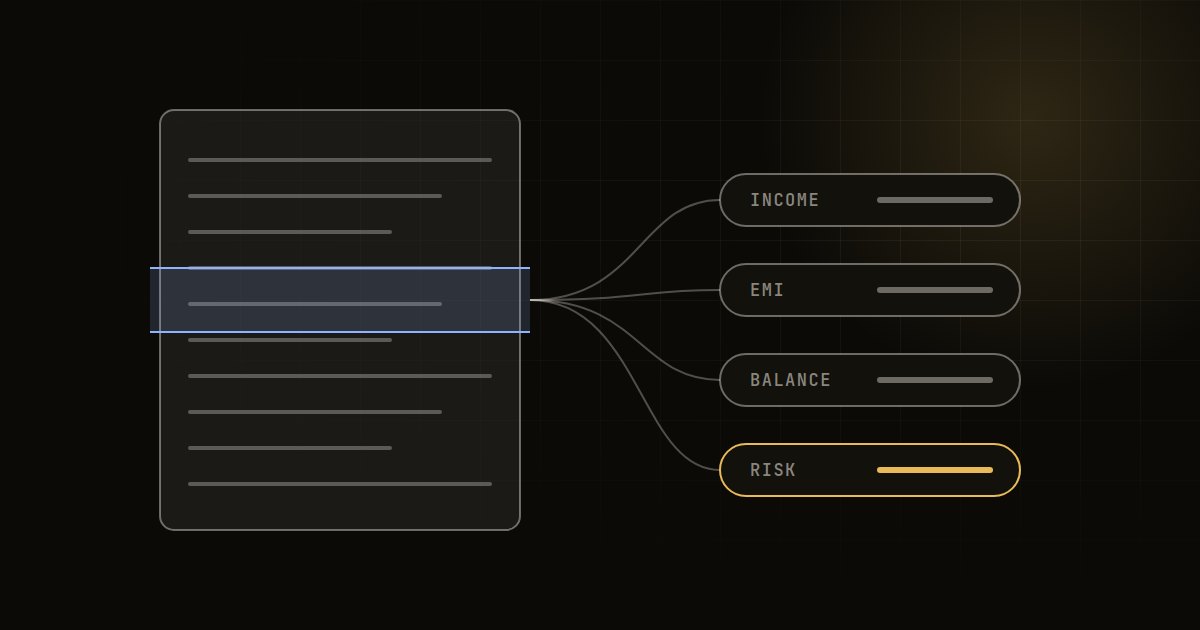
Loan files, especially for MSME lending, contain a mix of bank statements, GST returns, ITRs, financial statements and bureau reports. Analysts spend a lot of time reading and re-keying. A generative model can produce a first-draft credit summary, highlight inconsistencies such as turnover mismatches between GST and bank data, and cite where each figure came from.
The credit decision itself should stay with your approved models and credit committee. The value is in faster, more consistent preparation, not automated approval.
Operations and KYC
Document extraction was possible before large language models, but it needed templates per document type. Modern multimodal models handle varied formats, poor scans and regional languages better. Combined with rule-based validation, they can reduce manual rework in onboarding, as long as every extracted field is checked against a confidence threshold and exceptions go to a human.
Customer service and collections
Agent assist is often the safest place to start. The model suggests, the human decides and sends. This gives you real-world data on accuracy before you consider anything customer-facing. For collections, models can draft messages that follow your fair practices code and tone guidelines, with every template reviewed and approved in advance.
Compliance and internal knowledge
Staff constantly ask questions such as "What documents are needed for this product?" or "What does the latest circular say about this?". A retrieval-based assistant that answers only from approved internal documents, and always cites its source, saves time and reduces inconsistent answers across branches.
What generative AI should not do in a bank (yet)
Some uses carry risk that most institutions are not ready to take on:
- Autonomous credit decisions. Language models are not designed for explainable, stable risk scoring. Use them to prepare inputs, not to decide.
- Unreviewed customer advice. A chatbot that confidently gives wrong information on charges, interest or eligibility creates conduct risk and complaints.
- Uncontrolled external model use. Staff pasting customer data into public chat tools is a real and common risk. Provide a sanctioned, governed alternative.
Regulatory and risk considerations in India
Banks and NBFCs operate under RBI expectations on IT governance, outsourcing, cyber security, fair practices and customer protection, plus the Digital Personal Data Protection Act, 2023. None of these ban generative AI, but they shape how you deploy it. This is general information, not legal advice, so involve your compliance and legal teams early.
Practical implications include:
- Data residency and vendor due diligence. Understand where your model provider processes and stores data, and whether that fits your policies and regulatory commitments.
- Outsourcing governance. A third-party model API is a technology service provider. Apply your usual due diligence, contracts and audit rights.
- Explainability and audit trails. Log inputs, retrieved sources, outputs and human actions so you can reconstruct why something happened.
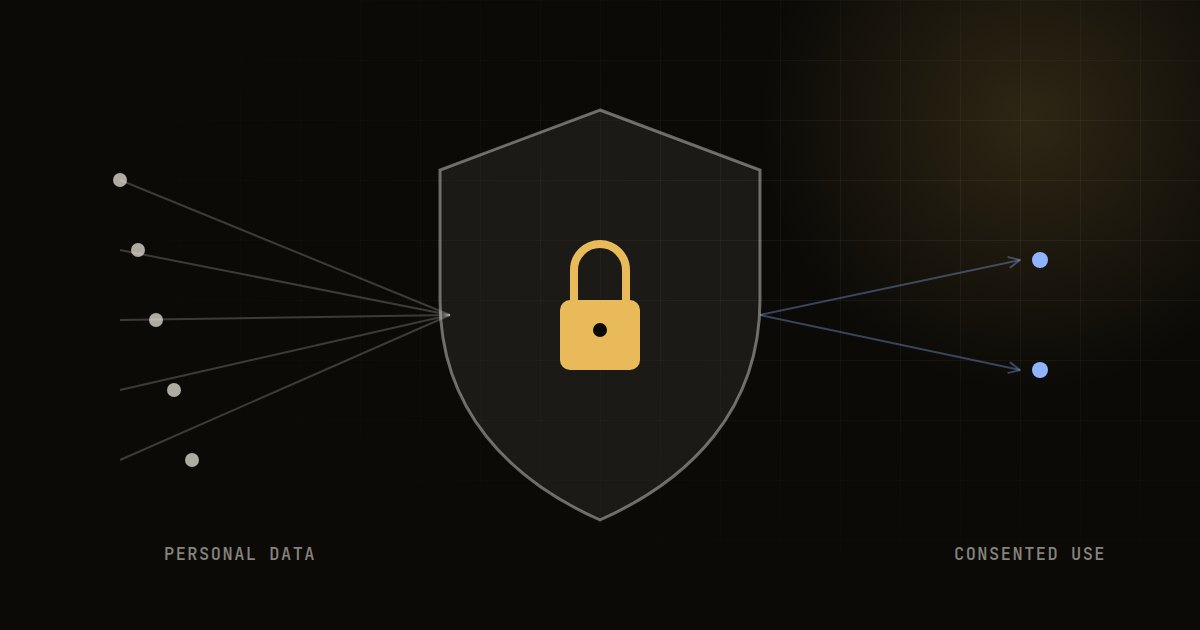
- Consent and purpose. Using customer data for new AI purposes needs to be consistent with your notices and consent. Our guide to DPDP Act AI compliance covers this in more detail.
- Model risk management. Bring generative AI into your model risk framework, with documented testing, approval and periodic review.
A step-by-step plan from pilot to production
- Pick one high-volume, low-regret use case. Internal knowledge search or agent assist is usually a good first choice. Define the current baseline, such as average handling time or turnaround time.
- Assess data readiness. Check that the documents or data you need are accessible, current and clean enough. Outdated policy documents produce confidently outdated answers.
- Choose the architecture. Most banking use cases work best with retrieval over approved documents rather than fine-tuning. See RAG vs fine tuning for the trade-offs.
- Decide on hosting. Options range from a managed model API in a suitable region, to a private deployment in your cloud, to an on-premises open-weight model. Each shifts cost, control and effort.
- Build guardrails. Mask personal data before it reaches the model where possible, restrict retrieval by user role, and filter outputs for policy breaches.
- Evaluate before launch. Build a test set with your domain experts and measure accuracy, groundedness and failure modes. Our LLM evaluation guide explains how.
- Launch to a small group. Start with a pilot team, collect feedback and measure against the baseline.
- Scale with monitoring. Track quality, usage, cost and incidents. Re-evaluate when models, prompts or documents change.
Cost drivers to plan for
Costs vary widely with scope, volumes and hosting choice, so treat any number with caution. The main drivers are:
- Model usage: priced per token for APIs, or compute for self-hosted models. Long documents such as full bank statements can be expensive per request if not pre-processed.
- Integration: connecting to loan origination, CRM, core banking and document management systems is often the largest engineering effort.
- Security and compliance work: masking, access control, logging and vendor assessment.
- Evaluation and operations: ongoing testing, monitoring and support.
As a rough guide, a focused internal use case can often be piloted in a matter of weeks, while a production rollout across teams with full integration and controls typically takes a few months. Your actual timeline depends heavily on data access and approvals.
Frequently asked questions
How is generative AI used in banking?
Banks mainly use generative AI to summarise documents, draft communications, assist customer service and collections agents, search internal policies and support compliance reviews. Most production deployments keep a human reviewing outputs. Fully customer-facing use is growing more slowly because of accuracy and conduct risk.
Is generative AI allowed by RBI?
RBI has not banned generative AI. Banks and NBFCs must still follow existing expectations on IT governance, outsourcing, cyber security, data protection and customer protection when they deploy it. Check the latest RBI guidance with your compliance team before launch.
Can NBFCs use ChatGPT or similar tools with customer data?
Using public consumer chat tools with customer data is generally a bad idea because you lose control over where data goes and how it is retained. Enterprise versions or private deployments with proper contracts, data controls and logging are more appropriate. Always assess vendor terms and data protection obligations first.
What is the best first generative AI project for a bank?
An internal knowledge assistant or agent assist tool is usually the best start. The users are trained staff, the source documents are controlled, and a human reviews every output. It builds capability and evidence before you attempt higher-risk use cases.
How do banks prevent generative AI hallucinations?
They ground answers in approved documents using retrieval, require citations, restrict the model to specific tasks and test against expert-built evaluation sets. Human review remains important for anything that affects customers. Continuous monitoring catches problems that testing missed.
How Sunday Labs can help
Our founder has led payments and lending engineering in Indian and Southeast Asian fintech, so we understand how credit, operations and compliance teams actually work. We help banks and NBFCs choose the right first use case, build it with proper controls and take it to production. Every project is founder-led with senior engineers doing the work. Learn more about our financial services work or start a conversation.